Cart
×

Driving opens a world of possibilities for young men with Duchenne muscular dystrophy. It’s been life changing for me. Below you’ll find my story about finding an accessible vehicle, getting behind the wheel, plus suggestions on who to reach out to for more information our resources. And reminder: my story may not be your story. Duchenne is a variable disease. But I hope that this will encourage you to find a way to drive and do other things you wouldn’t have thought possible.
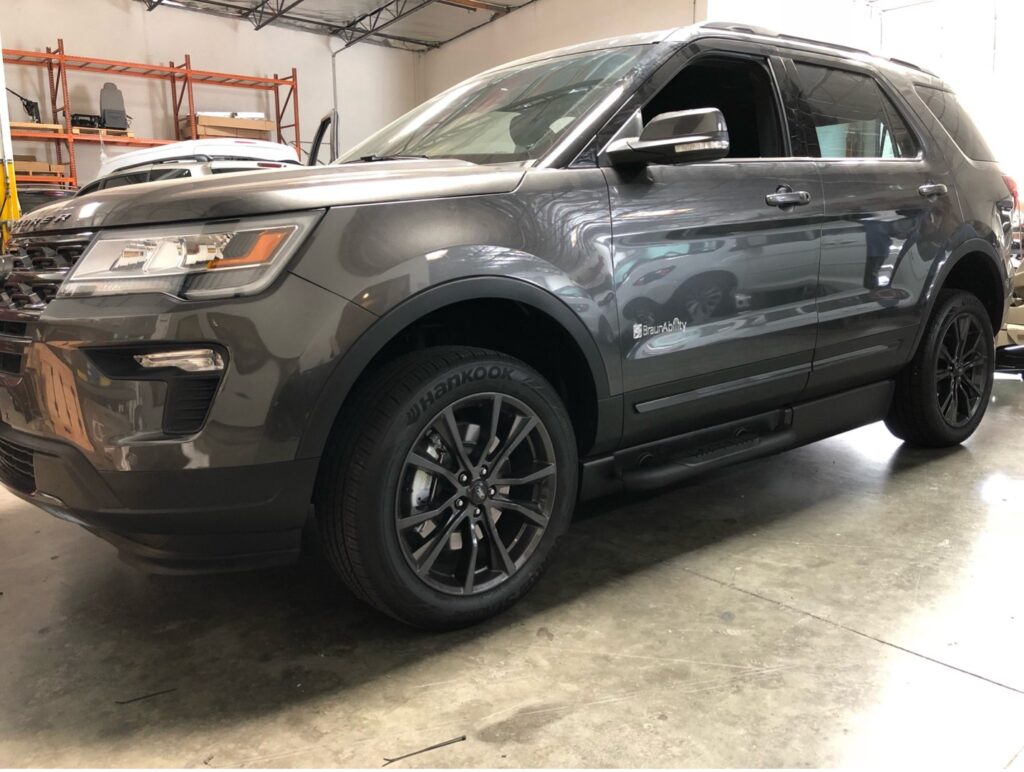
I drove a normal car until I became reliant on a big, bulky power wheelchair when I started college in 2015. Around that time, my dad and I visited the Abilities Expo in LA. There, we discovered the Ford Explorer converted SUV(unfortunately Ford stopped making front-wheel drive Explorers in 2020 so they can’t convert them anymore). I loved that it wasn’t a minivan and it had a sporty look with blacked out wheels.
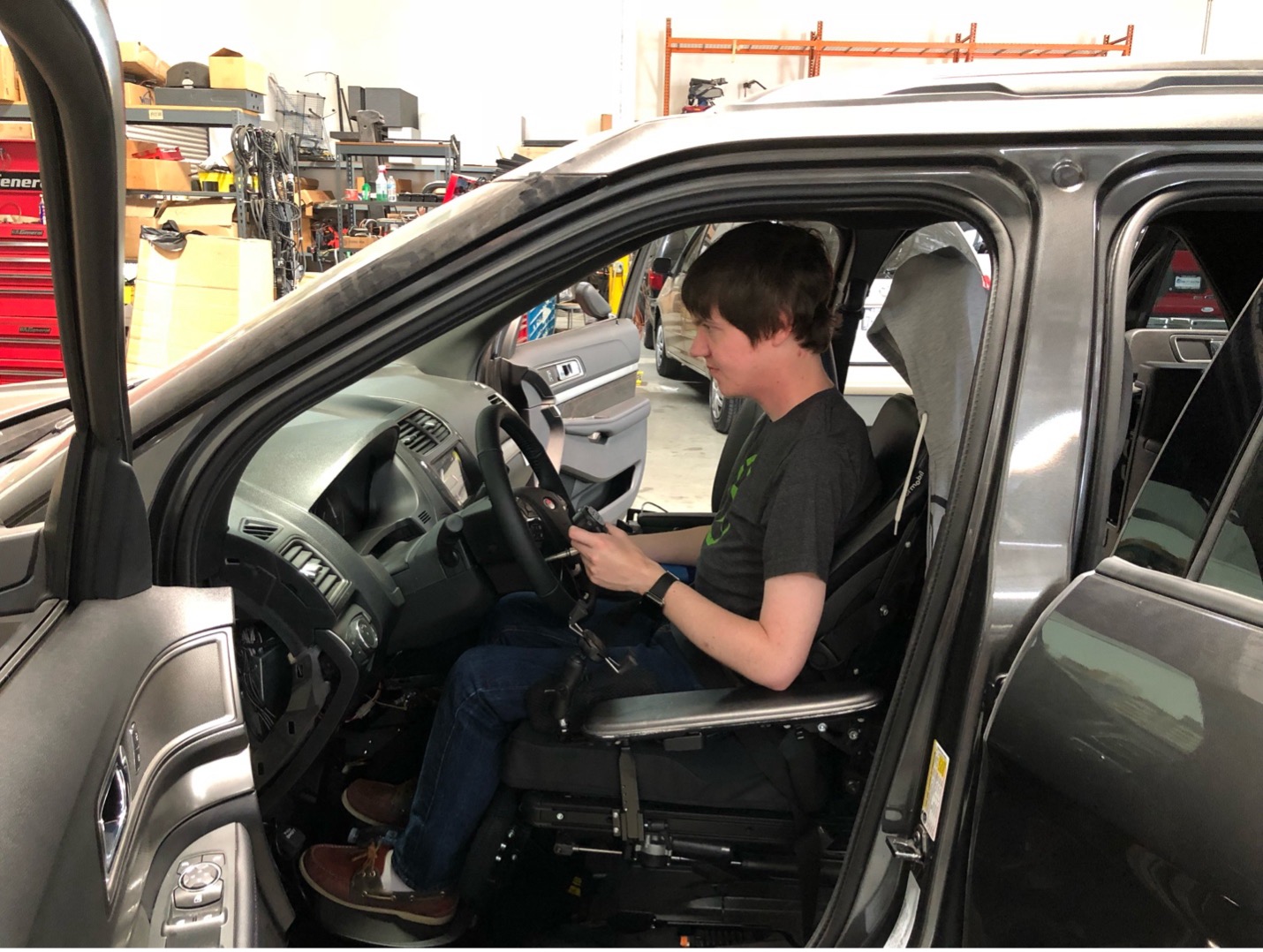
That initial look started us down the process for accessible driving. I had to be evaluated by a driving rehab specialist. He assessed me on my reaction time and reasoning. I tried a number of drive options before we settled on the push to brake, rock back to accelerate option. The other ones were too difficult for me. We also requested that United Access, the dealer that sold us the vehicle, added zero effort steering and braking to the car. That significantly reduces the strain to operate the vehicle.
Additionally, they added a Bluetooth spinner knob on the steering wheel that allows me to control the turn signals, windshield wipers, and lights with my thumb.
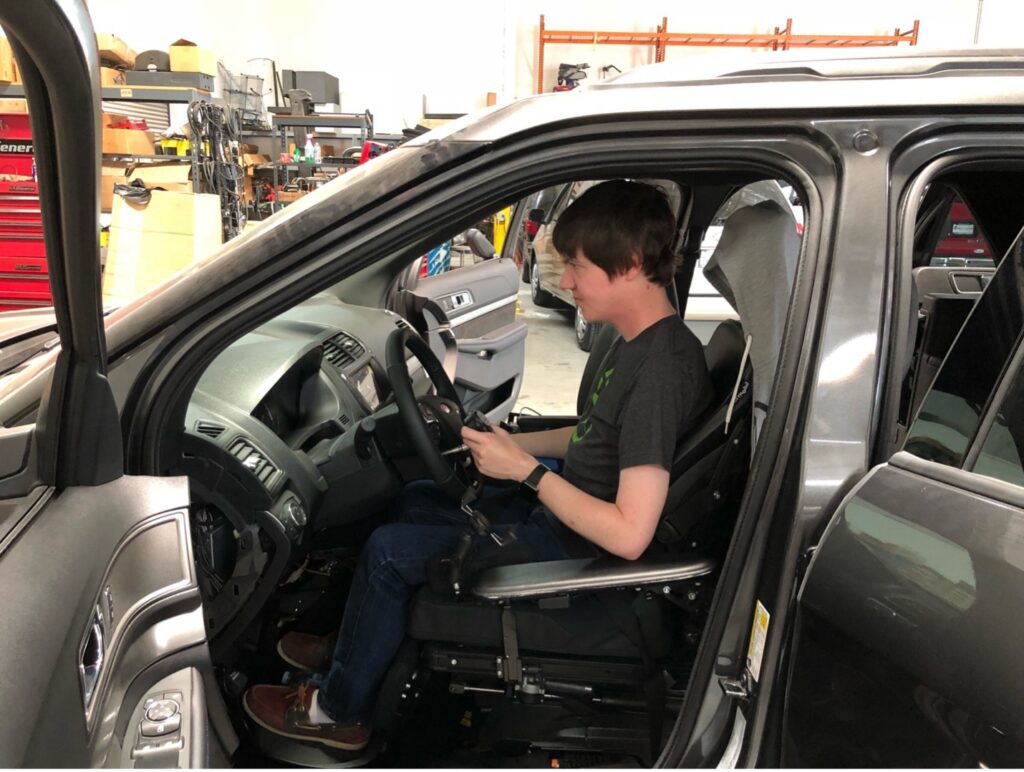
Another part of the conversion was the EZ Lock system. They installed a lock on the passenger and driver’s side in case I ever wanted to be a passenger. This system is straightforward. Three bolts are drilled into the bottom of my chair, and the locking mechanism is drilled on the driver and passenger side of the car. As I drive into the driver’s side of my car, I line up that bolt with the receiver of the EZ Lock system. I drive it straight in until it clicks and the EZ Lock system gets a secure grip on my wheelchair. On the driver’s side, there are 2 smaller receivers for my caster wheels to add extra support.
The other cool part about the car is the door and ramp are automatic. All I have to do is hit the unlock button 3 times, and the door and ramp open up for me. The door and ramp come out of the passenger side of the vehicle, which allows me to parallel park. Sometimes that takes some maneuvering to give the door enough space to open up and the ramp to deploy. This orientation works best for me because it gives me more parking options in tight spaces.
Learning how to drive the car with the new equipment was relatively easy for me because I had driven before and the hand controls operated a lot like a video game, which I have a lot of experience with.
I also understand not everyone has the same arm strength that I do. However, there are plenty of options available out there, anywhere from controlling it with your head, to controlling it with a joystick. With AI resources, you can conduct research from all over the internet to find what might work best for you and who to reach out to in your area. But don’t use AI to make your final decision, rather help it guide you on your journey.
These cars are very expensive, with the average cost being around $80,000. Some people will crowdfund to get an accessible vehicle. Additionally, some state departments of rehab will pay for a portion of the vehicle.
I hope that this will inspire you to get out on the road and find the tools and resources that work best for you.